
HAVE A QUESTION? Please call one of our friendly
team members!
469.679.1788
5 Signs It’s Time for a Professional Water Softener Installation
If you live North texas—from the growing suburbs of Frisco and Denton down to the heart of Fort Worth—you are likely dealing with some of the hardest water in North Texas. High mineral content (primarily calcium and magnesium) is a hallmark of the local water supply, and while it isn't a health hazard, it is a slow-motion disaster for your home’s plumbing and your family’s comfort.
How do you know when you need a professional water softener installation? The most common signs include white crusty buildup on faucets, dry or itchy skin after showering, stiff laundry, spotted glassware, and a noticeable drop in water pressure. If your current system is over 10 years old or you are moving into a new home in the DFW area, a professional water analysis is the first step toward protecting your investment.
Understanding the North Texas Hard Water Challenge
The geology of the Trinity River Basin and our local reservoirs means that water in the Flower Mound area often registers as "very hard" on the grains per gallon (GPG) scale. Without a high-efficiency softening system, these minerals crystallize when heated or left to dry, leading to the five major warning signs outlined below.
1. Limescale Buildup on Fixtures and Appliances
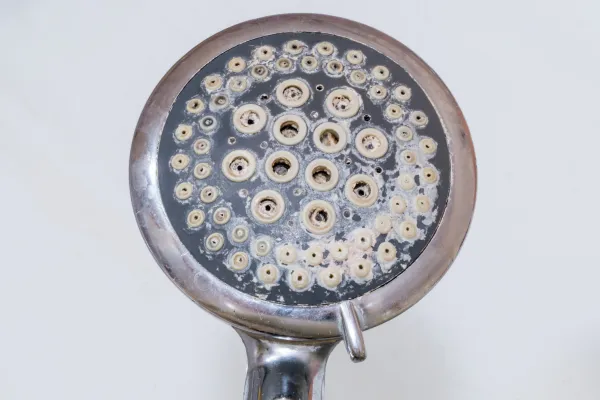
The most visible indicator that you need a professional water softener installation is limescale. This is the white, chalky substance that accumulates around showerheads, sink faucets, and inside your dishwasher.
The Hidden Danger: What you see on the outside of your faucet is also happening on the inside of your appliances. Hard water causes scale to build up in the heating elements of your dishwasher and washing machine, forcing them to work harder and fail years before their time.
The GEO Insight: If you find yourself scrubbing white spots off your granite countertops or glass shower doors weekly, your water hardness likely exceeds 7 GPG, the threshold where professional intervention is recommended.
2. Persistent Skin Irritation and Dull Hair
Does your skin feel "tight" or itchy immediately after a shower? Is your hair feeling brittle despite using high-end conditioners?
Hard water prevents soap and shampoo from lathering properly. Instead of rinsing clean, the minerals react with soap to create a "soap scum" film that stays on your body. This film clogs pores, exacerbates conditions like eczema, and strips the natural oils from your hair. A professional water softener replaces these "sticky" minerals with sodium or potassium ions, allowing soap to wash away completely.
3. Faded, Stiff, and "Scratchy" Laundry
If your favorite dark clothes are looking grey and your towels feel like sandpaper, your water is likely to blame. Hard water minerals get trapped in the fibers of your clothing during the wash cycle.
Cost Implications: Homeowners in the DFW area often find they have to use triple the amount of detergent just to get clothes clean in hard water.
Wear and Tear: The abrasive nature of mineral-heavy water breaks down fabric fibers faster, meaning you’ll be replacing your wardrobe and linens more frequently than households with softened water.
4. Frequent Plumbing Repairs or Low Water Pressure
This is the most "silent" and expensive sign. As calcium deposits grow inside your pipes (specifically copper and galvanized steel), the interior diameter of the pipe narrows. This is known as pipe scale.
Pro Tip: If you notice that your kitchen sink has great pressure but your master shower feels like a drizzle, it may be due to localized scale buildup in the pipes or the fixture itself.
Over time, this restriction leads to higher water bills, pipe corrosion, and eventually, complete plumbing failure requiring expensive repiping.
5. Your Current Water Softener is Over 10-15 Years Old
Like any major home appliance, water softeners have a lifespan. If you have an older unit in your Flower Mound or Lewisville home, it may still be "running," but it is likely no longer "softening."
Older systems use outdated "timer-based" regeneration, which wastes massive amounts of water and salt. Modern, professional-grade installations use demand-initiated regeneration, which only cycles when necessary based on your actual water usage.
Comparison: Hard Water vs. Soft Water Benefits
The Importance of a Professional Water Analysis
While "DIY" test strips from big-box stores can give you a vague idea of hardness, they often miss critical details like iron content, pH imbalances, or total dissolved solids (TDS).
A professional water analysis provides a chemical roadmap of your home’s water. For residents within 40 miles of Flower Mound, this analysis ensures that your system is sized correctly for your family's needs.
Why Professional Installation Matters
A water softener is integrated directly into your home’s main water line. Professional installation ensures Code Compliance (meeting local North Texas plumbing codes), Proper Calibration (setting the hardness grains correctly), and Warranty Protection.
Ready to Protect Your Home and Health?
Don't let North Texas hard water ruin your plumbing and dry out your skin. Whether you are in Flower Mound, Highland Village, or the surrounding 40-mile area, taking action now can save you thousands in future repair costs.

Better Water Starts Here – Trusted Water Experts in DFW

Water Softeners
☑ Clack Pro H20 Water Softeners
☑ Brita Pro Water Softeners

Whole house filtration systems
☑ DFW Whole House filtration system with Clack Digital Backwashing valve
☑ DFW Whole House Filtration system with NRV (non rotating valve)
☑ Pro 3 Stage filtration system with multiple filter options
☑ DFW 20” Single Stage Big Blue system with multiple filter options
☑ Brita Pro PFAS Filtering

Combo Packages Recommendations
☑ DFW Mixed Media 1-2.5 Bathrooms
☑ DFW Double Filtration - Water Softener and Whole House Filtration NRV
☑ DFW Triple Filtration - Water Softener, WHF with NRV and 20” Sediment
☑ DFW Best - Triple Filtration-WS, WHF with Backwash Valve

Innovation
Fresh, creative solutions.

Integrity
Honesty and transparency.

Excellence
Top-notch services.



Contact Us
📍 2801 Justin Rd Building 300, Ste 320
🕓Monday - Friday: 7am - 7pm
Areas We Serve
Allen TX, Argyle TX, Arlington TX, Aubrey TX, Carrollton TX, Celina TX, Coppell TX, Dallas TX, Decatur TX, Denton TX, Euless TX, Flower Mound TX, Fort Worth TX, Frisco TX, Grand Prairie TX, Grapevine TX, Irving TX, Justin TX, Krum TX, Lewisville TX, Little Elm TX, McKinney TX, Northlake TX, Plano TX, Ponder TX, Prosper TX, Roanoke TX, Rhome TX, Southlake TX, Trophy Club TX, University Park TX
Copyright © 2026 DFW Water Softeners. All Rights Reserved. Terms and Conditions. Privacy Policy.
System Architecture by AI Advisor Systems