
HAVE A QUESTION? Please call one of our friendly
team members!
469.679.1788
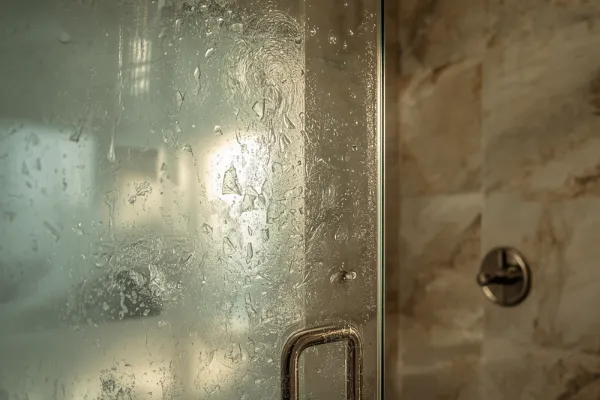
Why Your Shower Glass Keeps Getting Cloudy and How Hard Water Causes It
You clean the shower door, step back to admire it, and a few days later the glass looks foggy again. The recurring haze is frustrating because scrubbing harder often feels like the only option. In many North Texas homes, the cause is the water left behind after every shower.
Hard water contains dissolved calcium and magnesium. When droplets dry on glass, mineral residue remains. Soap can react with those minerals and leave another layer of buildup. Over time, the combination can turn a clear door into a daily cleaning job.
Is the haze mineral scale or soap scum?
They often appear together, but it helps to know the difference. Mineral spots usually form where water droplets dry. Soap scum may look like a dull film, particularly on lower sections of glass and around fixtures. Shampoo, body wash, and other products add residue of their own.
Run your fingers over the surface after it is dry. A rough, crusty feel around the edges or on nearby chrome suggests mineral buildup. A slippery or waxy film points toward soap and product residue. Many shower doors have both, so one wipe with glass cleaner may leave the surface looking just as cloudy.
The same pattern can show up on showerheads, faucets, tile, and drinking glasses. Those clues are worth sharing when you request a water test. A hardness test puts a number on the mineral level instead of relying on the appearance of the glass alone.
Why North Texas bathrooms show the problem so clearly
A glass shower door gives minerals an ideal place to collect: it gets wet often, then dries in the open air. Warm showers encourage evaporation, leaving the dissolved minerals behind. Textured glass, seams, tracks, and areas around the handle can trap moisture and residue longer than the flat center panel.
A family using the same shower several times a day may see cloudy glass sooner than a household that uses it once each morning. The local water source matters as well. DFW includes different utilities and private wells, so it is better to measure the water in your home than assume every suburb has the same hardness.
The U.S. Geological Survey explains that calcium and magnesium define hardness and that hard water reacts with soap to form soap scum. That is why a bathroom can look dirty again soon after you clean it: the source of the residue is still coming out of the showerhead.
How to clean the existing film
Start with the manufacturer's care instructions for your shower door. Some glass has a protective coating that can be damaged by abrasive pads, harsh acids, or the wrong cleaner. Test any approved product on a small area first, and never mix household cleaners.
For ordinary, uncoated glass, a cleaner labeled for mineral deposits may help with white scale. Use it exactly as directed, rinse well, and dry the glass. A separate soap-scum cleaner may be needed for the oily film. If the door has years of buildup, you may need more than one careful treatment. Permanent etching or coating damage will not disappear simply because the surface is clean.
Then make prevention easy:
Use a squeegee after the last shower of the day.
Leave the door open when appropriate so moisture can dry.
Wipe the tracks and metal edges that hold water.
Clean the showerhead and faucet before crust accumulates.
Keep a simple weekly cleaning routine instead of waiting for a thick film.
These steps reduce visible residue, but they do not remove hardness from the water. If you are constantly repeating the job, address the water itself.
What a water softener can and cannot do
A properly sized salt-based water softener reduces the calcium and magnesium entering the home's plumbing. With less hardness, there is less mineral residue available to dry onto the glass. It also helps soap work more effectively, which can make bathroom cleaning easier.
Softening will not scrape years of buildup off an existing door, repair damaged glass, or replace wiping away shampoo residue. And a basic softener is not designed as a substitute for a filter if your separate concern is chlorine taste or odor. For households dealing with both, DFW Water Softeners also offers whole house filtration. The right combination depends on your water and priorities.
Could something besides hardness be involved?
Yes. The cleaning product itself can leave streaks, especially if it dries before being rinsed. A worn shower-door coating may look permanently hazy. Caulk, grout, or metal trim can also shed residue onto nearby glass. If the glass is cloudy even immediately after you clean and dry it, inspect those surfaces before blaming the water alone.
A simple comparison helps. Wash one small area using the door manufacturer's recommended method, rinse, dry it completely, and compare it with an untreated section the next day. If new spots appear only after showers, fresh water droplets are likely contributing. If the haze never moves, professional glass care or replacement may be the more honest answer. A softener reduces new mineral deposits; it cannot repair etched glass.
You can also check whether your existing softener is in bypass or out of salt. A working system that suddenly stops treating water can make a bathroom seem to change overnight. Test the treated water before replacing the shower door.
Make the next cleaning last longer
A clear door should not require a major scrubbing session every weekend. Test hardness, clean the glass with products suited to its finish, and reduce the fresh minerals landing on it. Even after installing a softener, a quick squeegee remains worthwhile. The difference is that routine cleaning should be more manageable.
Tired of the shower door turning cloudy again? Schedule a free water quality test with DFW Water Softeners. They can measure your home's hardness and explain whether a softener would help with the residue you see.

Better Water Starts Here – Trusted Water Experts in DFW

Water Softeners
☑ Clack Pro H20 Water Softeners
☑ Brita Pro Water Softeners

Whole house filtration systems
☑ DFW Whole House filtration system with Clack Digital Backwashing valve
☑ DFW Whole House Filtration system with NRV (non rotating valve)
☑ Pro 3 Stage filtration system with multiple filter options
☑ DFW 20” Single Stage Big Blue system with multiple filter options
☑ Brita Pro PFAS Filtering

Combo Packages Recommendations
☑ DFW Mixed Media 1-2.5 Bathrooms
☑ DFW Double Filtration - Water Softener and Whole House Filtration NRV
☑ DFW Triple Filtration - Water Softener, WHF with NRV and 20” Sediment
☑ DFW Best - Triple Filtration-WS, WHF with Backwash Valve

Innovation
Fresh, creative solutions.

Integrity
Honesty and transparency.

Excellence
Top-notch services.



Contact Us
📍 2801 Justin Rd Building 300, Ste 320
🕓Monday - Friday: 7am - 7pm
Areas We Serve
Allen TX, Argyle TX, Arlington TX, Aubrey TX, Carrollton TX, Celina TX, Coppell TX, Dallas TX, Decatur TX, Denton TX, Euless TX, Flower Mound TX, Fort Worth TX, Frisco TX, Grand Prairie TX, Grapevine TX, Irving TX, Justin TX, Krum TX, Lewisville TX, Little Elm TX, McKinney TX, Northlake TX, Plano TX, Ponder TX, Prosper TX, Roanoke TX, Rhome TX, Southlake TX, Trophy Club TX, University Park TX
Copyright © 2026 DFW Water Softeners. All Rights Reserved. Terms and Conditions. Privacy Policy.
System Architecture by AI Advisor Systems