Water Softener Maintenance: How to Keep Your System Running for Years
A water softener can work quietly for months, which makes it easy to forget until white scale returns to your faucets. The good news is that routine checks are straightforward. You do not have to take the equipment apart or wait for a breakdown to tell whether something has changed.
For North Texas homeowners, the goal is simple: keep the brine tank supplied, confirm the system is still producing soft water, and arrange service when the signs point beyond a routine refill. Your owner's manual and model-specific instructions should always take priority over a general checklist.
Know what your softener actually does
Most salt-based home softeners use ion exchange to reduce calcium and magnesium, the minerals responsible for water hardness. The system periodically regenerates its resin using a salt solution from a separate brine tank. If the tank runs out of salt, the unit loses power, or regeneration is interrupted, hardness can show up again in dishes, showers, and appliances.
The water softener systems offered by DFW Water Softeners are sized to the household's water quality and use. That sizing matters for maintenance too. A larger family with heavy water use may refill salt more often than a two-person household with the same model.
Check the salt level on a schedule
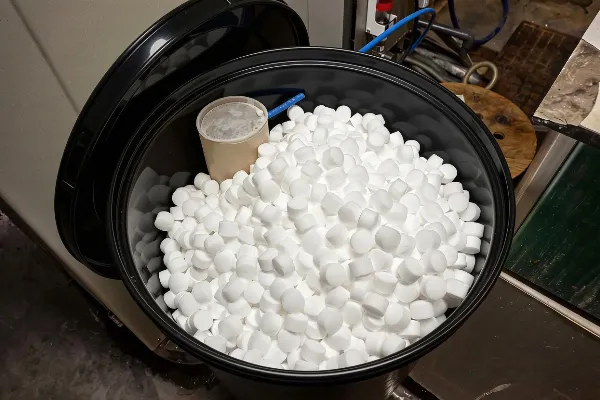
Set a monthly reminder to look inside the brine tank. Make sure there is salt available for the next regeneration and follow the fill range recommended for your equipment. The company's FAQ says many customers add salt about every four to six weeks, but your actual schedule depends on system size and water use.
Check the type of salt specified by the manufacturer. Clean, high-quality pellets are common, but a particular unit may recommend another formulation. Do not add random additives or overfill the tank just to avoid checking it again. Keep the lid closed to protect the salt from debris.
If the salt appears full for months even though the softener should be regenerating, do not assume you have exceptionally efficient equipment. The salt could be forming a hard bridge over an empty space. A careful inspection may reveal a hollow area underneath. Follow the manual for breaking up a bridge, or ask a service technician to handle it if you cannot confirm what you are seeing.
Watch for changes in water and operation
A routine maintenance habit is easier when you know the early signs of trouble. Look for:
White scale returning to faucets, showerheads, or glassware.
Soap that suddenly lathers less than it used to.
An empty salt tank, unusual salt buildup, or standing water at an unexpected level.
A display that shows an error, wrong time, or power loss.
A regeneration cycle that seems to run at the wrong time or not at all.
A leak, drain issue, or unusual sound near the unit.
One bad load of dishes is not a diagnosis. Check the bypass valve and power first, then measure hardness at a softened tap if you have a reliable test. Compare that with an unsoftened outside tap when the plumbing layout allows. If the result has changed, record it before calling for service.
Keep the settings current
Some softeners measure the water used and regenerate as needed. Others use a timer. Either way, settings can drift after a power outage, a change in household size, or a plumbing modification. If your water use has changed substantially, ask whether the current regeneration settings still fit.
Your installer can also review the incoming hardness setting. A softener programmed for water that is much softer than your actual supply may regenerate too late. A unit programmed too aggressively may use more salt and water than necessary. Avoid changing unfamiliar settings at random; write down the current values and consult the manual or a professional.
Plan occasional cleaning and professional service
Brine tanks can accumulate residue over time. The cleaning interval depends on the salt, tank condition, and the manufacturer. Follow the specific instructions for your unit, particularly before using any resin cleaner or sanitizing product. More chemical is not automatically better.
A service visit can check hardness before and after treatment, inspect the control valve and drain, confirm regeneration, and catch leaks. If the system is also paired with whole house filtration or reverse osmosis, those filters have their own replacement schedules. Put all the dates on one household calendar.
DFW Water Softeners lists a salt delivery and preventive maintenance option in its FAQ. Ask the team what that service includes for your particular equipment and location.
Keep a simple maintenance record
Use a note on your phone or a sheet near the equipment. Record when you add salt, how many bags you use, hardness readings, filter changes, and any error codes. Take a photo of the control panel settings after installation. A short record makes an unexpected change obvious and helps a technician troubleshoot without guessing when the problem began.
If you travel or leave the home vacant, follow the manufacturer's instructions for extended absences. Ask whether the system should remain powered and how to restart it when you return. If a home is going through renovations, protect the equipment from paint, dust, and accidental changes to its bypass valves. Small habits can prevent avoidable service calls.
When should you call instead of troubleshooting?
Call a professional for persistent hard water after adding salt, repeated error messages, leaks, a blocked drain, or a unit that repeatedly fails to regenerate. Also get help if you recently moved in and cannot tell which pipes are softened or how the existing system was installed.
A maintenance visit can be useful even when the unit seems fine. It gives you a baseline hardness reading and a chance to ask how much salt your household should reasonably use. That is more useful than copying a neighbor's refill schedule.
Want confidence that your system is doing its job? Contact DFW Water Softeners to ask about maintenance, salt delivery, or a water check. A small routine today can save a lot of scrubbing and troubleshooting later.
